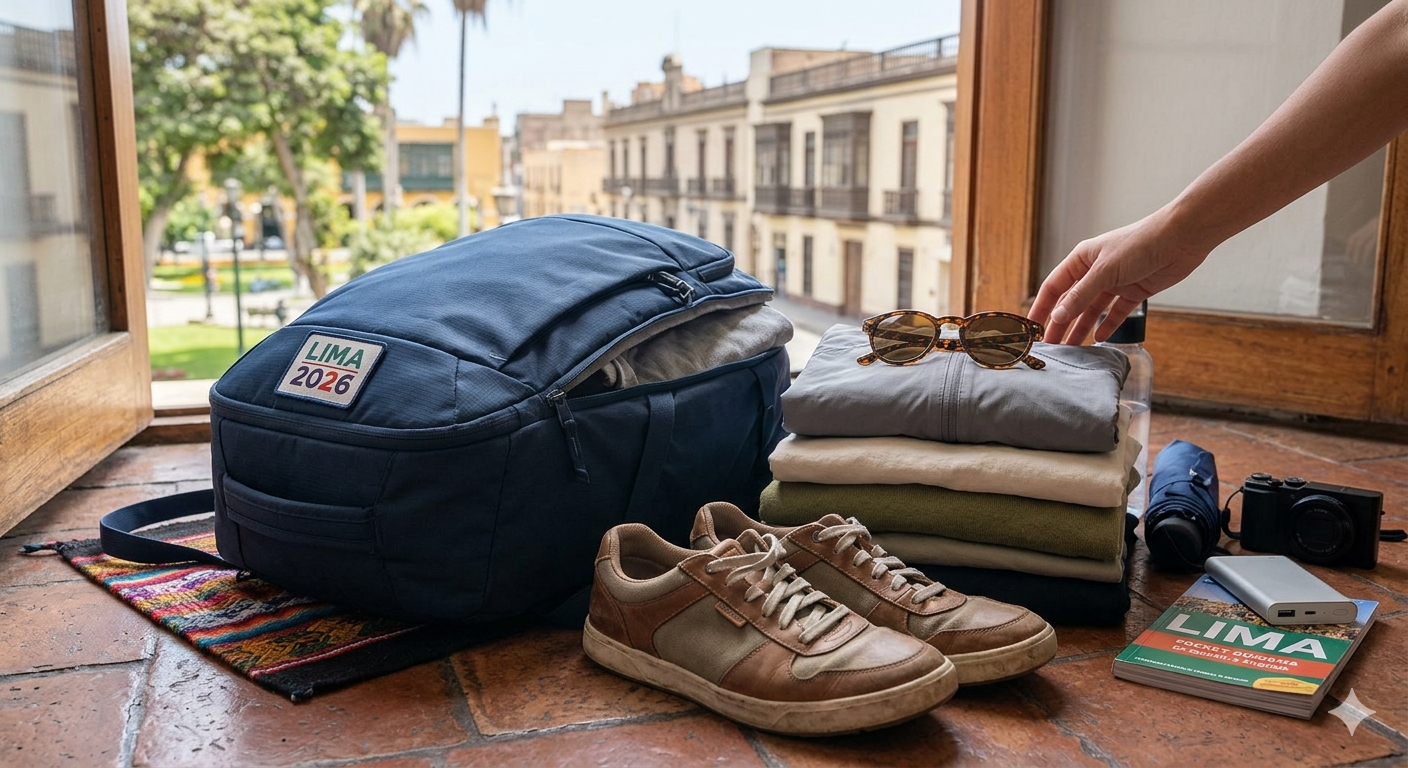
What to Pack for Lima: The Local's Packing List by Season
Most packing lists for Lima get the climate wrong. Here's what to actually bring for a coastal desert that never gets hot or cold, by season, by activity, and by what travelers regret leaving home.
What to Pack for Lima: The Local's Packing List by Season
Most packing lists for Lima get one thing badly wrong: they treat the city like a generic Latin American capital. They tell you to pack for tropical heat (Lima never gets hot), or for Andean cold (Lima isn't in the Andes), or to bring a heavy raincoat (it almost never rains). The result is a suitcase that has too much of what you don't need and too little of what you do.
Lima has one of the strangest microclimates in the world. It's a coastal desert that stays mild year-round, with cool mornings, garúa fog for half the year, and intense UV through clouds. Packing for it is genuinely different from packing for anywhere else in South America. This guide is the version we'd hand to a friend before they zipped their bag — based on what we see travelers actually need, and what they wish they'd brought.
We've been guiding visitors through Lima since 2014. Below is what works.
The 30-second answer
If you only have time for the headline:
- Layers, year-round. A t-shirt, a long-sleeve, a light fleece or sweater, a windbreaker.
- Comfortable closed-toe walking shoes — sneakers, not sandals.
- A light rain jacket or windbreaker, even in summer (cliffside breeze).
- Sunscreen and sunglasses, even in winter (UV is high through the garúa).
- No heavy winter clothing. No heavy summer clothing either. Lima sits in a 10-degree band year-round.
The rest of this guide explains why, and what to add for specific activities.
Why packing for Lima is different
Three facts shape what to pack:
1. The temperature variation is unusually small. Lima's annual range — from coldest winter morning to hottest summer afternoon — is about 10°C (18°F). The hottest summer day rarely passes 28°C. The coldest winter morning rarely drops below 14°C. Most cities see this range in a single week.
2. It almost never rains. Lima averages 9 millimeters of rainfall per year — among the lowest of any major city in the world. What it has instead is garúa: a coastal mist that sits over the city from May to November. Garúa won't soak you, but it will leave you slightly damp on a long walk.
3. UV is high year-round. Lima sits at 12° south of the equator. The UV index is consistently in the "high" to "very high" range, even on grey winter days when the sun feels distant. Sunscreen is non-negotiable in any season.
Lima isn't tropical, isn't Andean, isn't temperate in the way most travelers expect. It's coastal desert at low latitude with cold ocean influence. The packing list reflects that.
The core packing list (every season)
These are the items you'll need regardless of when you visit.
Clothing
- 3-4 t-shirts or light tops in breathable fabric (cotton, merino, linen).
- 2-3 long-sleeve shirts for layering and cooler evenings.
- 1 light fleece, sweater, or sweatshirt. This is the layer most travelers underestimate.
- 1 light windbreaker or rain jacket. Packable, water-resistant. Essential year-round — even in summer, the cliffside breeze on the Malecón at sunset is cooler than you'd expect.
- 1-2 pairs of long pants or jeans. Comfortable for walking, evenings out, and the Historic Center cobblestones.
- 1 pair of shorts for summer (December-March only).
- A light scarf or buff. Useful for the garúa breeze, useful on the bike tour, useful as a sun cover. The single underrated item.
- Underwear and socks for your trip duration plus 2 spare days.
- 1 set of activewear if you plan to bike, surf, paraglide, or run the Malecón.
Footwear
- Comfortable closed-toe walking shoes (sneakers or trail runners). The most important item on this list. You'll walk 5-10 km a day across cliffside paths, cobblestones in the Historic Center, and the steep Bajada de los Baños in Barranco. Sandals are not enough.
- A second pair of casual shoes for evenings out, or sandals for the beach if you're going in summer.
- Avoid heels and dress shoes. Lima's streets and cobblestones don't reward them.
Practical items
- Sunscreen (SPF 30+ minimum, 50+ better). Reef-safe if you'll be in the ocean.
- Sunglasses with UV protection. The Pacific glare on the Malecón is real even in winter.
- A reusable water bottle. Lima's tap water is technically potable but most locals drink filtered. Most hotels have water dispensers. Refill, don't buy disposable bottles all day.
- A small day backpack for water, sunscreen, light layer, camera. Better than carrying things in your hands on the cliff path or in markets.
- A power adapter. Peru uses Type A and Type C plugs (the same flat-pin and round-pin types used in North America and most of Europe respectively). 220V, 60Hz. North American devices charge fine; check Asian devices for compatibility.
- A portable battery pack for your phone. Lima days are long, especially with bike tours and Historic Center walks.
Documents and money
- Passport (with at least 6 months validity beyond your stay).
- Printed copy or photo of your passport stored separately from the original.
- At least 2 cards in different pockets/bags.
- About 200 soles ($55 USD) in cash for your first day. Withdraw more from ATMs in Miraflores at standard rates rather than airport currency exchanges.
- Travel insurance documentation — accessible offline.
Health basics
- Any prescription medications (in original packaging, with a copy of the prescription).
- Standard travel kit — paracetamol, ibuprofen, antihistamine, anti-diarrheal.
- Hand sanitizer for street food and market lunches.
- Insect repellent if you're heading to the Amazon afterward — not needed in Lima itself.
Summer packing add-ons (December — April)
Lima's summer is sunny, warm but never hot, with the Pacific at its warmest. Don't pack for tropical heat. The temperature peaks at 28°C (82°F) but typically sits 23-26°C (73-79°F).
Add:
- Swimwear if you're planning to swim or surf. The Pacific even in summer is cool (21-22°C / 70-72°F), but plenty of locals swim.
- A light hat or cap for direct sun.
- Sandals or flip-flops for the beach or hotel pool.
- A light dress or shorts and a nice top for dinners out.
- Sunscreen — the previous note doubled. UV is at its strongest December-March.
What you don't need in summer: heavy rain gear, winter jackets, gloves, scarves heavier than the light buff already in the core list.
Winter packing add-ons (May — November)
Lima's winter is cool, garúa-covered, and damp without being rainy. The temperature range is 15-22°C (59-72°F). Don't pack for true winter. No down coat, no thermal layers.
Add:
- A slightly heavier sweater or fleece beyond the light layer in the core list.
- A more substantial windbreaker or light rain jacket, especially for the cliffside garúa breeze.
- Closed shoes only — no sandals or open footwear. Mornings can be genuinely cool.
- A scarf or light wool buff for the cooler evenings (June-August).
What you don't need in winter: gloves, hats heavier than a light beanie, anything insulated for sub-zero temperatures. Lima never approaches that.
Activity-specific add-ons
Lima isn't a gear-heavy destination, but a few activities benefit from specific items.
For the bike tour
If you're booking a bike tour — and you should — most operators provide bikes, helmets, and water. What you bring:
- Comfortable closed-toe shoes. Sneakers ideal.
- Sunglasses. The Pacific glare is constant on the Malecón.
- Sunscreen applied before the tour.
- A light layer even in summer — the breeze on the cliffs adds a few degrees of cooling.
- A small backpack with water and a phone for photos.
- A scarf or buff for face protection from wind on longer rides.
🚴 What to wear on a Lima bike tour
Our Urban Bike Tour ($59 USD, 3 hours, 11 km) provides bikes, helmets, and water — what you bring is a windbreaker, sneakers, sunglasses, and sunscreen. The route runs along sheltered, dedicated bike lanes on the cliffside, so the bike experience is approachable for all fitness levels.
✓ Trilingual local guide (English, French, Spanish)
✓ Comfortable bikes and helmets included
✓ Safe, dedicated bike lanes the whole way
✓ Small groups (8 people maximum)
For the beach or surf
Lima's beaches are functional rather than postcard — Pacific water, cool year-round, mostly used for surfing and walking rather than sunbathing. If you're going:
- Swimwear and a beach towel.
- A wetsuit if you're surfing — most surf schools provide one, but check. The Pacific is cold even in summer.
- Aqua shoes or flip-flops for rocky beaches like La Herradura.
- A waterproof phone case if you want to take photos from the water.
For paragliding
Tandem flights from the Miraflores cliffs are short (10-15 minutes) but you're in the air, with wind. What helps:
- Closed shoes (mandatory — sandals not allowed).
- A windbreaker or jacket even in summer.
- Long pants rather than shorts.
For fine dining
Lima's destination restaurants — Maido, Central, Kjolle, Mérito — have a smart casual dress code. No need for jacket and tie, but no shorts or athletic wear either. Slim chinos or dark jeans, a collared shirt, closed shoes for men. A dress, smart pants, or a top with skirt or jeans for women. The Lima dining culture is polished but not stiff.
What most travelers over-pack
A short list of items that take suitcase space without earning it:
- Heavy winter coats. Lima never approaches winter coat temperatures. A fleece + windbreaker layered is more than enough.
- Multiple pairs of dressy shoes. One pair for evenings out is sufficient. Heavy, cobblestone-incompatible heels stay home.
- Towels. Hotels and Airbnbs provide them. Even hostels provide them or rent them cheaply.
- A full-size hairdryer. Hotels provide them; Airbnbs almost always have them.
- Massive quantities of medication and toiletries. Lima has well-stocked pharmacies (look for Inkafarma and Mifarma chains across Miraflores) and you can replenish anything you forgot.
- Multiple cameras and lenses for non-photographers. Your phone camera is fine for the Lima experience. Save the gear for Cusco and the Sacred Valley.
What most travelers under-pack
The opposite list — items travelers consistently wish they'd brought:
- A light rain or wind jacket. Even in sunny summer, the cliffside breeze at sunset, the wind on the Bajada de los Baños, and the early-morning garúa (yes, garúa exists in summer too, just less) all benefit from a light shell.
- Sunglasses. The Pacific glare is constant. Travelers who skip sunglasses regret it within a day.
- Sunscreen they can replenish. A 50ml tube doesn't last a week of cliffside walking. Bring a 100ml bottle minimum.
- A second pair of comfortable walking shoes. Lima walking puts more wear on shoes than people expect, and one pair gets damp from garúa if you're caught out.
- A scarf or buff. Underrated for wind protection on the bike, sun protection at the beach, evening warmth at sunset.
- A reusable water bottle. Hot showers and ocean walks dehydrate you faster than you'd think.
Packing for an extended Peru trip
If Lima is the start of a longer Peru trip — Cusco, Sacred Valley, Machu Picchu, the Amazon — your packing list expands beyond Lima itself. The key additional items:
- Layered warmer clothing (Cusco at 3,400m gets cold at night, especially May-September).
- Hiking boots if you're doing the Inca Trail or other treks.
- Insect repellent and long sleeves for the Amazon.
- Altitude medication (Diamox / acetazolamide) if your doctor recommends — Cusco's altitude affects most lowland visitors.
For most of these add-ons, you'll wear them in Cusco or beyond, not in Lima. You can leave the heavier gear at your Lima hotel during day excursions and pick it up before flying onward.
Final checklist
A condensed version you can tick through before zipping your bag:
Clothing
- ☐ T-shirts (3-4)
- ☐ Long-sleeve shirts (2-3)
- ☐ Light fleece or sweater
- ☐ Windbreaker / light rain jacket
- ☐ Long pants (1-2)
- ☐ Shorts (summer only)
- ☐ Underwear and socks
- ☐ Activewear (if biking, surfing, etc.)
- ☐ Smart-casual evening outfit
- ☐ Light scarf or buff
- ☐ Swimwear (summer only)
Footwear
- ☐ Comfortable walking shoes (essential)
- ☐ Casual evening shoes
- ☐ Sandals (summer only)
Practical
- ☐ Sunscreen (SPF 30+)
- ☐ Sunglasses
- ☐ Reusable water bottle
- ☐ Day backpack
- ☐ Power adapter
- ☐ Portable battery pack
- ☐ Hand sanitizer
Documents
- ☐ Passport (6+ months validity)
- ☐ Passport copy
- ☐ Cards (2+, separate pockets)
- ☐ Cash (200 soles for arrival)
- ☐ Travel insurance documentation
Health
- ☐ Prescription medications (with prescription copy)
- ☐ Travel medical kit
- ☐ Insect repellent (if continuing to Amazon)
FAQ
What clothes should I bring to Lima?
Layered clothing for mild temperatures. Lima sits in a 10°C annual range, never truly hot or cold. Pack t-shirts, long-sleeve shirts, a fleece or sweater, and a light windbreaker — all of them, year-round. Add shorts and swimwear for summer (December-April), or a slightly heavier sweater for winter (May-November). Never pack heavy winter coats or beach-only summer wear.
Do I need a rain jacket in Lima?
Not for rain — for garúa and wind. Lima averages only 9 millimeters of rain per year, but the garúa coastal mist (May-November) and the cliffside breeze at sunset (year-round) both benefit from a light, packable windbreaker or rain shell. Skip the heavy rain gear; bring something compact you can keep in your daypack.
What shoes should I wear in Lima?
Comfortable closed-toe walking shoes. Sneakers or trail runners are ideal. Lima walking covers cliffside paths, cobblestones in the Historic Center, and steep streets like Bajada de los Baños in Barranco. Avoid heels, dress shoes, and (except at the beach) sandals. A second pair of casual shoes for evenings is useful but not essential.
Do I need to bring sunscreen to Lima?
Yes, year-round. Lima sits at 12° south of the equator with consistently high UV, even on grey winter days when the sun feels distant through the garúa. SPF 30 minimum, SPF 50 better. Bring at least a 100ml tube — a small one won't last a week of outdoor activity, and replenishing in Lima is straightforward but pricier than at home.
Can I drink the tap water in Lima?
Officially yes, in practice no. Lima's tap water is treated to drinking standards, but most locals drink filtered or bottled water as a routine matter. Bring a reusable water bottle and refill at hotel filtered-water dispensers — most hotels and Airbnbs have them. Brushing teeth with tap water is fine. Avoid ice from street vendors.
What kind of plug adapter do I need for Peru?
Peru uses Type A (flat parallel pins, North American style) and Type C (two round pins, European style). 220V, 60Hz. North American devices (which run on 110V/60Hz) often have universal chargers that handle both — check the small print on your charger ("100-240V"). If your device is 110V only, you'll need a voltage converter, not just a plug adapter. A universal adapter that handles Type A and C is the safest choice.
What should I pack for a bike tour in Lima?
Closed-toe shoes (sneakers), sunglasses, sunscreen, a light windbreaker, and a small backpack with water. Most operators (including ours) provide bikes, helmets, and water. The cliffside route is on dedicated bike lanes — no special biking gear needed. The light layer is the key item — even in summer, the breeze on the Malecón adds a few degrees of cooling.
How much cash should I bring to Lima?
Bring 200-400 soles ($55-110 USD) for your first day or two, then use ATMs in Miraflores for additional withdrawals at standard rates. Skip airport currency exchange — the rates are 5-10% worse than the ATM. Most restaurants, hotels, and tours accept cards, but cash is useful for street food, taxis, market lunches, and small purchases.
Do I need a power adapter for Lima?
It depends on your home country. If you're from North America, your devices likely charge directly (Type A plugs, 110V devices typically handle 220V too — check). If you're from Europe, your Type C plugs work but you'll need to verify voltage compatibility. For everyone, a universal adapter is the safest bet. Lima's voltage is 220V, 60Hz.
Packing for Lima? Our Urban Bike Tour is the most-booked first-day experience for arriving travelers — closed-toe shoes, sunglasses, and a light layer are all you need. Or contact our team and we'll tailor a Lima trip to your packing reality.

