Lima 3 Days Itinerary: The Definitive Guide for a Perfect Long Weekend
Three days is the sweet spot for Lima, long enough to go beyond the checklist, short enough to feel focused. Here's the definitive plan, with three options for Day 3.
Lima 3 Days Itinerary: The Definitive Guide for a Perfect Long Weekend
Three days is the sweet spot for visiting Lima. Two days is enough for the highlights but leaves you wanting more. Four days starts to feel like you're stretching — unless you have a specific reason to stay longer (food deep-dive, day trips to Pachacámac or Caral). Three is the right amount of time to cover the coast, the Historic Center, and one proper experience that goes beyond the checklist.
This itinerary is the version we'd hand a friend who has actually chosen Lima as a destination — not as a stopover before Cusco. It's the structure most of our 3-day guests follow, with the variations we recommend depending on what kind of traveler they are. The pace is comfortable, the meals are spread across different neighborhoods, and Day 3 is built around the experience that ends up being the one most travelers say was worth flying for.
We've been guiding 3-day Lima trips since 2014. Below is what works.
Quick overview: the 3-day structure
Before the hour-by-hour, here's the shape of the itinerary at a glance:
- Day 1 — Coastal introduction: Miraflores, the Malecón, Barranco, ceviche, sunset at Parque del Amor.
- Day 2 — Historic center and museum: Plaza Mayor, San Francisco catacombs, Pueblo Libre, Larco Museum, Barranco at night.
- Day 3 — The deep dive: Pick your angle. Food, coast, or a day trip outside the city.
This structure works because each day has a different rhythm. Day 1 is movement and orientation. Day 2 is culture and depth. Day 3 is the experience that personalizes the trip.
Day 1: the coastal introduction
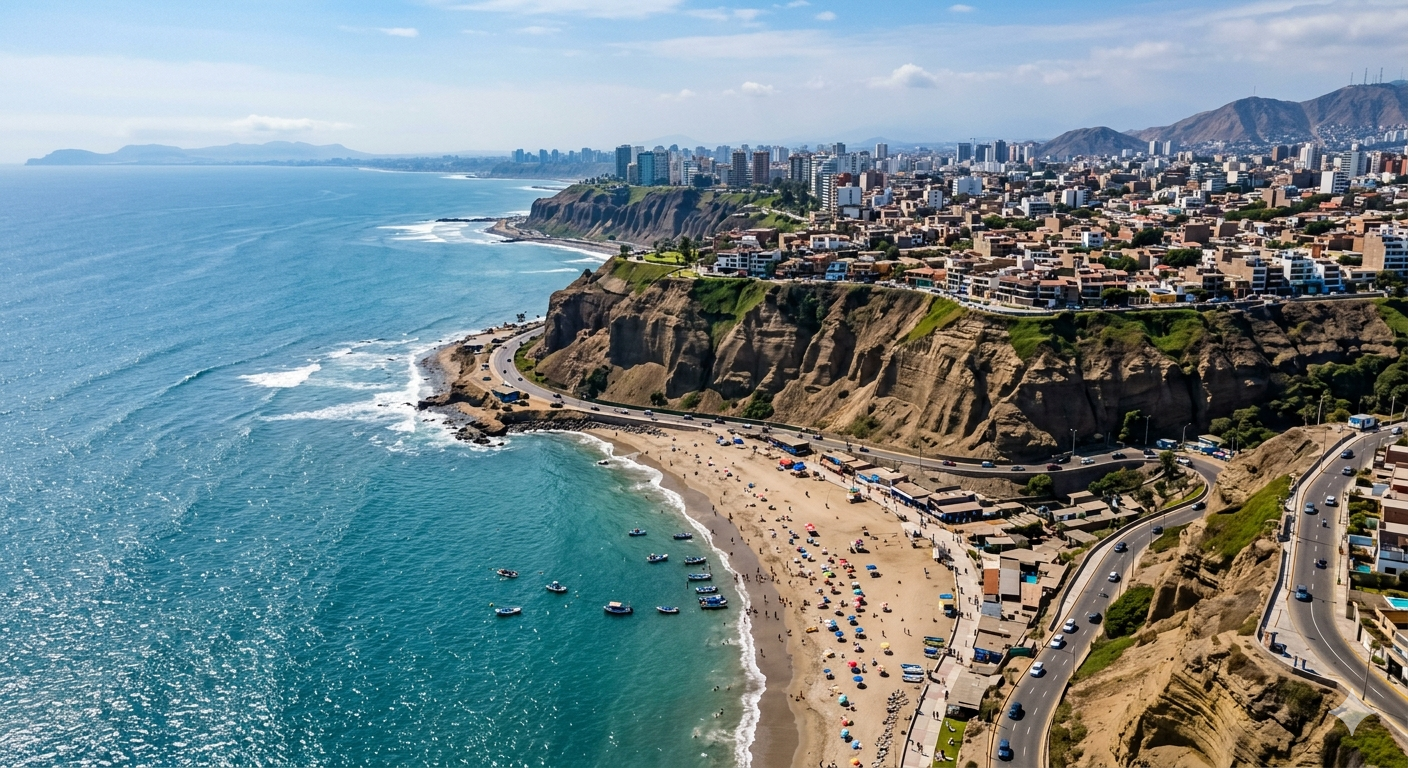
Day 1 is identical to what we recommend for any Lima visit, regardless of length: get your bearings on the city by riding the coast. By the end of Day 1 you'll have seen Miraflores and Barranco — the two most-visited districts — and understood why most travelers cite the Pacific cliffs as the highlight of their stay.
Morning (9:30 — 13:00): bike the coast
Start with breakfast at Tostaduría Bisetti (Barranco) or Tanta (Miraflores) — the pan con chicharrón (pork sandwich) is the right introduction to Peruvian breakfast. By 10:00, you should be on bikes.
The coast tour covers the Malecón clifftop promenade, Parque del Amor, Larcomar, the Bridge of Sighs in Barranco, and the street art that fills central Barranco. Three hours by bike, starting in Miraflores and ending in Barranco. The same route by taxi or on foot would take most of the day and miss most of what makes the cliffside route distinctive.
🚴 The Day 1 anchor for any Lima trip
Our Urban Bike Tour ($59 USD, 3 hours, 11 km) is the most-booked first-day experience for Lima visitors. It covers the full Miraflores-to-Barranco Malecón with a local guide who builds the orientation that makes Days 2 and 3 land properly.
✓ Trilingual local guide (English, French, Spanish)
✓ Comfortable bikes and helmets included
✓ Safe, dedicated bike lanes the whole way
✓ Small groups (15 people maximum)
Lunch (13:30 — 14:30): ceviche in Barranco
Finish the bike tour in Barranco, walk one block to Canta Rana, and have your first ceviche. Sixty-year-old neighborhood institution, ceviche mixto with sweet potato and cancha corn, around 50 soles ($14 USD). Ceviche only at lunch in Lima — the morning's catch is freshest before 15:00. Save the seafood-forward dinner for Day 2.
Afternoon (15:00 — 17:00): Huaca Pucllana
Take an Uber back to Miraflores (15 minutes, ~25 soles). Huaca Pucllana is a 1,500-year-old adobe pyramid built by the Lima culture between 200 and 700 AD, sitting in the middle of the modern district. Guided tours leave every 30 minutes (English available), last 45 minutes, and cost 15 soles ($4 USD). It's a useful primer for what you'll see at the Larco Museum on Day 2 — pre-Inca Peru is a much longer story than most visitors expect.
Evening (17:30 — 22:00): sunset and dinner
Walk to Parque del Amor for sunset — about 18:30 in summer, 18:00 in winter. The Pacific takes 20 minutes to set and the sky stays pink for another 20.
For Day 1 dinner, stay in Miraflores. Rafael (Italian-Peruvian fusion, around 250 soles for two with wine) or Amoramar in Barranco (relaxed, seafood-forward, around 180 soles for two) are the right level for the first night — good but not the destination meal you'll save for later in the trip.
Day 2: the Historic Center and the museum
Day 2 reveals the Lima underneath modern Miraflores. The colonial city is a different country layered on top of the same one — Pizarro's founding square, baroque churches, the catacombs, and the museum that puts 5,000 years of Peruvian civilization into a single afternoon.
Morning (9:30 — 12:30): the Historic Center
Take an Uber to Plaza Mayor (25-30 minutes from Miraflores, ~30 soles depending on traffic). This is where Pizarro founded Lima in 1535. The square holds the Government Palace, the Cathedral of Lima (with Pizarro's tomb in a small chapel to the right of the main altar), and the bright yellow Archbishop's Palace with the famous wooden balconies.
The changing of the guard at the Government Palace at noon is worth timing your visit around. Two blocks east, the San Francisco Monastery has the city's most visited catacombs — narrow corridors lined with the bones of an estimated 25,000 people, arranged into geometric patterns. The visit is 45 minutes and costs around 25 soles.
If you'd rather skip the navigation, the most thorough way to cover the Historic Center is on bike. Our Downtown Lima tour ($105 USD, 5h30, 25 km) covers Plaza Mayor and the catacombs plus the colonial neighborhoods most visitors never see — including Pueblo Libre, where the pisco sour was invented. It's the right choice if you want to compress Day 2 into a single guided block.
Lunch (13:00 — 14:30): Pueblo Libre
Head to Pueblo Libre for lunch at Antigua Taberna Queirolo, the 19th-century bodega still pouring the original pisco sour recipe from the same wooden bar. Order one straight from the source. The food is traditional Peruvian — seco de cordero, aji de gallina, causa rellena — and the room is essentially a working museum. Around 80 soles ($22 USD) per person.
The bonus: Pueblo Libre is where the Larco Museum is located. You're already in the right neighborhood for the afternoon.
Afternoon (15:00 — 17:30): Larco Museum
The Museo Larco is set in an 18th-century mansion and holds one of the world's most complete collections of pre-Columbian art — Chavín, Moche, Nazca, Inca. The cultures are presented chronologically, which is the most useful framing for travelers who'll continue to Cusco and Machu Picchu later in their trip.
Allow 2 to 2.5 hours. The garden café is a calm spot to break up the visit. Entry is 35 soles ($10 USD). The museum closes at 22:00 — unusually late — which means you can extend the visit if it grabs you.
Evening (18:30 — late): Barranco at night
Take an Uber to Barranco (~20 minutes, 25 soles). Day 2 evening is when you go deeper into the neighborhood you only sampled on Day 1. Walk Bajada de los Baños down to the ocean, cross the Bridge of Sighs, and sit in Plaza San Francisco with a coffee.
For dinner, Isolina (traditional Peruvian comfort food in a converted colonial house, around 100 soles per person) or Cosme (contemporary Peruvian, small plates, strong cocktail program, around 120 soles per person). Both are walking distance from each other in central Barranco.
After dinner, Ayahuasca is the cocktail bar most locals send their friends to — a 19th-century mansion turned multi-room bar with one of the strongest pisco sour programs in Lima. Victoria Bar has live Peruvian music most nights — criollo, afro-peruano, and bossa nova. Both stay open past midnight.
Day 3: the deep dive
Day 3 is what makes the trip personal. By now you've covered the structural sights — the coast, the Historic Center, the major museum. Day 3 should be the experience that fits who you are. We see three patterns repeat with our guests, and any of them is the right call depending on the traveler.
Day 3 — Option A: the food day
If you've fallen for Peruvian cuisine — and most visitors do — Day 3 should be a food day. Lima was named the culinary capital of South America by World's 50 Best for nine years running, and the food scene is what most travelers end up thinking about for years afterward.
The structure of a food-focused Day 3:
9:00: breakfast at a Lima coffee specialty café — Quinoa Café in Miraflores or La Bodega Verde in Barranco.
10:30 — 13:00: a food tour. Lima has two genuinely useful types: a cooking class (4 hours, $80-120 USD, ends with you eating what you cooked, usually includes ceviche, causa, and pisco sour), or a huariques food tour that takes you to the unmarked, family-run restaurants where Lima actually eats. Huariques are the spots without websites or signs, the ones the city's chefs eat at on their days off.
🍴 The food experience that defines a 3-day Lima trip
Our Huariques & Bike tour ($95 USD, 4h30, 10 km) takes you to four huariques on bikes between stops, with tastings included — anticuchos, causa, ceviche from a back-alley specialist, and a proper pisco sour. It's our most-booked Day 3 add-on.
✓ Trilingual local guide (English, French, Spanish)
✓ Four tastings included
✓ Comfortable bikes between stops (mostly flat)
✓ Small groups (15 people maximum)
Book the Huariques & Bike tour →
14:00 — 16:00: rest, walk the Malecón, recover from lunch.
18:00 — 22:00: a destination dinner. Maido (#5 World's 50 Best, Peruvian-Japanese tasting menu, around $200 per person, 2-3 month reservation lead time) or Central (#2 World's 50 Best, tasting menu organized by altitude, around $250 per person). If neither is reservable, Mérito in Barranco (around 250 soles per person) is the next-tier option that consistently delivers.
For more on what to eat where, see our Peruvian food guide.
Day 3 — Option B: the coast and adventure day
For travelers who want to use the Pacific more actively, Day 3 along the southern coast is the right move.
9:00: breakfast in Miraflores. By 10:00 you should be heading south.
10:30 — 14:30: the coast experience. Two solid options:
The bike-and-surf combination: our Surf & Bike tour ($57 USD, 4 hours, 6 km) combines a coastal bike ride from Miraflores down to Chorrillos with a surf lesson at Makaha or La Herradura. Year-round waves, beginner-friendly equipment, the warmest stretch of the Lima coast.
Paragliding from the cliffs: tandem flights launch from Parque Salazar in Miraflores all afternoon. 10-15 minutes of flight time, around $80 USD, no experience needed. Best in late afternoon when the thermals pick up. Pair it with a long lunch at one of the cliffside restaurants.
15:00 — 17:00: lunch and the cliff path back to Miraflores. La Rosa Náutica is the famous pier restaurant if you want the postcard view. Less expensive options in Chorrillos.
18:00: sunset on the cliffs. By Day 3 you'll have your favorite spot — most travelers settle on Parque Salazar or Mirador de Chorrillos.
20:00: a relaxed Day 3 dinner near your hotel. The contrast between the coast in the afternoon and a slow restaurant in the evening is the right ending for an active day.
Day 3 — Option C: a day trip outside the city
For travelers who want to see something most visitors miss, a Day 3 trip outside Lima is genuinely worth it.
Pachacámac is the most accessible option — a sprawling pre-Inca pilgrimage complex 30 km south of Lima, about 1 hour each way by car. The site covers about 5 square kilometers and includes the Temple of the Sun, the Acllawasi (the house of the chosen women), and the Pachacámac Site Museum. Half-day tours run from Lima for around 80-150 soles ($22-42 USD). The closest you'll get to a major archaeological site without flying to Cusco.
Caral is the more ambitious option — the oldest known city in the Americas, dating to around 2,600 BC, located 200 km north of Lima. Full-day trip, 4-5 hours of driving total. Worth it for visitors with a strong archaeological interest, demanding for the casually curious.
The southern beaches — Asia, Punta Hermosa, Punta Negra — are a different kind of day trip, especially in summer (December-April). 1-1.5 hours south of Lima, surfing and beach culture, the kind of day that's slow and sun-drenched. Best done in a rental car or with a private driver.
The day trip option works best if you're an early riser. Plan to leave Lima by 8:30 to be back for dinner.
What to do on the morning of Day 3 (if you're leaving in the afternoon)
A common variation: your Day 3 ends at 14:00 because you have an evening flight to Cusco. In that case, swap the structure: do the food experience or surf lesson on Day 2 evening (replacing the Barranco dinner), and use Day 3 morning for a slow, low-pressure activity that's easy to time.
Three options that fit a 9:00-13:00 morning window:
- A long breakfast and walk along the Malecón — calm, scenic, no schedule.
- The Larco Museum if you didn't do it on Day 2 — easy to pace, easy to leave when needed.
- Last-minute shopping at the Mercado Indio in Miraflores or Dédalo in Barranco — Peruvian textiles, silver, ceramics, the things that don't fit in a carry-on but make the trip stick in your house.
Then back to your hotel, transfer to the airport, and onward to Cusco.
What to skip on a 3-day Lima trip
Even with three days, some Lima options aren't worth the time:
- Hop-on hop-off bus tours. Lima's traffic is famously bad. A 2-hour bus loop gets you maybe 4 photo stops and a lot of frustration. By bike or on foot you'll see far more in less time.
- The ground-floor restaurants at Larcomar. The view is great but the food is overpriced and average. Walk 10 minutes inland and you'll do better for half the price.
- Souvenir markets near the Plaza Mayor. Mass-produced trinkets at tourist prices. The Mercado Indio in Miraflores has better quality at similar prices, with less pressure.
- Long combined day trips that try to fit Pachacámac AND Caral into one day. It can't be done well — pick one. The driving alone is 5+ hours combined.
- Peripheral districts (San Juan de Lurigancho, Comas, Independencia). No tourist has a reason to be there, and they're a 45+ minute Uber from the central districts.
What if you have a 4th day?
The honest answer: 4 days starts being more than most travelers need for Lima alone, unless you have a specific extra interest. The natural Day 4 additions:
- A second food experience — a cooking class if you did the huariques tour, or vice versa.
- Pachacámac if you didn't already do it on Day 3.
- A slow day at the southern beaches in summer.
- Deeper neighborhood exploration — the Open Studio art tour in Barranco, or a longer walk through Pueblo Libre.
If your interests run wider — gastronomy week, a specific archaeology focus, surfing — then 5+ days makes sense. Otherwise, the right move is to add a day to Cusco rather than Lima.
FAQ
Is 3 days enough for Lima?
Yes — three days is the sweet spot for most travelers. It's enough to cover the coast, the Historic Center, the Larco Museum, two solid restaurant experiences, and one personalized Day 3 (food, coast, or day trip). For visitors specifically interested in Peruvian gastronomy or with a strong archaeology focus, 4-5 days makes sense. For most travelers, 3 days is exactly right.
Should I spend 3 days in Lima or use one for Cusco?
If you have a total of 5-7 days in Peru, the standard split is 2-3 days Lima + 4-5 days Cusco/Sacred Valley/Machu Picchu. Three days in Lima is enough; the additional time is better spent in Cusco where Machu Picchu, the Sacred Valley, and the surrounding sites need real time. Lima first is the right order — sea level acclimatization before flying to Cusco's 3,400 meters.
What's the best Day 3 for Lima?
The most-booked Day 3 by a clear margin is the food day — either a cooking class or our Huariques & Bike tour. Visitors consistently cite the food as the part of Lima they think about for years afterward. The coast/adventure Day 3 is a strong second, especially in summer (December-April). A day trip to Pachacámac is worth it for travelers with strong archaeological interest.
Is Pachacámac worth visiting from Lima?
Yes — for travelers with at least 3 days in Lima. Pachacámac is the closest major archaeological site to the city, only 30 km south, and gives you context for the pre-Inca cultures you'll see referenced again at Larco Museum and in Cusco. The visit is half a day with travel. It's not Machu Picchu, but it's not trying to be — it's an extensive, atmospheric, thinly visited site that most Cusco-focused travelers skip.
Where should I eat in Lima for a 3-day trip?
A natural rotation: Day 1 ceviche lunch at Canta Rana (Barranco) or Punto Azul (Miraflores), Day 1 dinner at Rafael (Miraflores) or Amoramar (Barranco), Day 2 lunch at Antigua Taberna Queirolo (Pueblo Libre), Day 2 dinner at Isolina or Cosme (Barranco), Day 3 destination dinner at Maido, Central, or Mérito if you can get a reservation (book 2-3 months ahead). For the broader food landscape, see our Peruvian food guide.
Is Lima safe for a 3-day visit?
Yes. Miraflores, Barranco, and San Isidro — where this entire itinerary keeps you for sleeping and most meals — are the safest districts in Lima, day and night. The Historic Center is safe by day, and you'll leave by Uber after the daytime visit. Avoid the outer districts, which you have no reason to visit anyway. See our Lima safety guide for the full picture.
When is the best time to do a 3-day Lima trip?
Lima is mild year-round. November to April is sunniest (peak summer) — best for the cliffs, the beaches, and outdoor activities. May to October is garúa season — overcast, cooler, but with reliable openness and lower prices. The two strongest single months are November and March — shoulder windows with summer-quality weather but without peak-season crowds and pricing. See our best time to visit Lima guide for a month-by-month breakdown.
Do I need to book Lima restaurants in advance?
For Maido, Central, and Mérito: book 2-3 months ahead, no exceptions. For mid-tier destination restaurants (Rafael, Cosme, Isolina): 1-2 weeks. For cevicherías and casual lunches: walk-ins work, though weekends benefit from a 1-day reservation. Note: ceviche only at lunch — never dinner.
Building your 3-day Lima itinerary? The combination of Urban Bike Tour on Day 1 and Huariques & Bike on Day 3 is the most-booked structure for travelers on a long-weekend Lima trip. Or contact our team and we'll match the plan to your dates and interests.


